
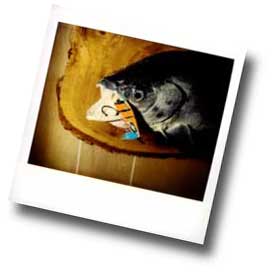
The one that didn't get away!

 don't
think they appreciated my inquiries, and they certainly didn't like the
idea of competition. If only they knew I was just fascinated by the beautiful
feathers. All I wanted was to learn.
don't
think they appreciated my inquiries, and they certainly didn't like the
idea of competition. If only they knew I was just fascinated by the beautiful
feathers. All I wanted was to learn.
Unfortunately, the pair thought Sidney was trying to cut into their market, and they didn't want anything to do with him.
"Today it's very different for a person wants to learn how to tie," Sidney says. Salmon and trout associations sponsor schools and Sidney himself taught up to 15 students a session at the New Brunswick Community College in Bathurst during the late 1980s.
Sidney believes there is a growing interest in the art of fly tying and he credits this to parallel developements in salmon conservation.
There is a feeling among younger fishermen that the salmon and the art are becoming endangered species, so they are lining up at fly tying schools around the province as a result.
"The new generation wants to learn how to tie their own. It's a feeling of control over your own fishing and in a sense, the environment around you if you've made your very own fly....It's an even better sense of accomplishment if you can catch something with it."
Sidney has seen
many changes in the wild fisheries over the past half-century since
he first took up fly tying. Industrial pollution has taken its toll
on salmon and trout populations and the ban on commercial salmon fishing
in New Brunswick has forced drastic changes on both the commercial and
sports fisheries.
Top
of Page
Homepage | The Anatomy of a Salmon Fly Explained | Biography of Sidney Jarratt